
- All
- Product Name
- Product Keyword
- Product Model
- Product Summary
- Product Description
- Multi Field Search
English
Views: 0 Author: Site Editor Publish Time: 2025-12-01 Origin: Site


High-precision tool manufacturing is crucial in industries like aerospace, automotive, and medical devices, where tools must meet strict performance and safety standards. These sectors rely on advanced technologies that can produce tools with tight tolerances and complex geometries. CNC Tool Grinding and Electrical Discharge Machining (EDM) are two leading technologies used for this purpose. CNC Tool Grinding uses rotating grinding wheels controlled by a computer to shape and sharpen tools with high accuracy, making it ideal for tools like drills and end mills. EDM, on the other hand, uses electrical discharges to erode material from the workpiece, which is effective for creating intricate shapes and details in hard materials like titanium and carbide. This article will compare CNC Tool Grinding and EDM, focusing on their precision, material compatibility, and cost-effectiveness, helping manufacturers choose the right method based on their production needs.
CNC Tool Grinding uses a rotating grinding wheel to precisely shape and sharpen cutting tools, controlled by a computer numerical control (CNC) system. This method ensures high accuracy and repeatability, making it suitable for materials like high-speed steel (HSS) and carbide. CNC grinding is commonly used for standard and custom tooling, such as drills and end mills, providing efficient, high-quality results.
Electrical Discharge Machining (EDM) is a non-contact process that uses electrical sparks to erode material and create intricate shapes. The tool and workpiece are submerged in dielectric fluid, and the sparks remove material precisely. EDM is ideal for hard materials like carbide and titanium, excelling at creating detailed features and complex geometries that CNC grinding may struggle with.
CNC grinding and EDM both offer precision but differ in their methods. CNC grinding uses abrasive contact to shape tools, while EDM uses electrical discharges to erode material. CNC grinding is ideal for simpler tool geometries, whereas EDM is better for fine details and complex shapes in hard materials. The choice between the two depends on the tool’s material, geometry, and the required precision for the application.
CNC tool grinding and EDM both provide high-precision finishes but differ in their results. CNC tool grinding is known for delivering smooth, high-precision surfaces, especially on simple tool geometries like drills and end mills. It offers a fine finish with minimal burrs, ideal for cutting tools. EDM also provides fine finishes, particularly on hard materials or intricate shapes. However, EDM leaves a slight recast layer on the surface, which may affect the finish. CNC tool grinding is typically preferred for tools requiring a smooth, burr-free surface.
CNC tool grinding works best with hard materials like high-speed steel, carbide, and ceramics. The grinding process can efficiently shape and sharpen these materials. EDM, on the other hand, is suited for conductive materials, particularly hard alloys like carbide and titanium. EDM is ideal for intricate shapes in materials that are too hard to grind or where grinding would be too slow or difficult. Non-conductive materials, such as plastics, are not suitable for EDM.
CNC tool grinding is effective for producing precise, simple geometries with sharp edges, making it ideal for drills, taps, and other standard tools. For more complex geometries, such as intricate internal angles or detailed cavities, EDM is superior. EDM allows for non-contact cutting, making it easier to produce complex shapes in hard materials without risk of damaging the tool. It’s ideal for molds, turbine blades, or parts with detailed features.
CNC tool grinding generally offers faster cycle times, particularly for standard tool shapes and high-volume production. Once set up, CNC grinders can produce tools quickly and consistently, with less need for operator intervention. EDM tends to have longer cycle times, especially for fine details or hard materials, as it works through material erosion. While EDM is more precise for complex shapes, it is slower than CNC grinding. For mass production of simpler tools, CNC grinding is more productive, while EDM is best for low-volume production of intricate or delicate tools.
CNC tool grinding is often the more cost-effective option for high-volume production. The automated nature of CNC grinding reduces the need for manual intervention, and once a machine is set up, it can run multiple cycles without significant downtime. This minimizes setup times and tool changes, leading to faster production rates and lower per-unit costs. The efficiency of CNC tool grinding ensures consistent results, making it ideal for mass production of standardized tools such as drills and end mills, where the cost-effectiveness of scaling up is crucial.
CNC tool grinding is particularly suited for the production of larger tools that don’t require intricate geometries. Tools like end mills, drills, and reamers benefit from CNC grinding's ability to achieve high precision with minimal human input. The grinding process is ideal for shaping these tools to exact tolerances, particularly when producing multiple units at once. The machine's ability to maintain consistent quality across large batches is a significant advantage in industries that require a high volume of reliable tools for standard applications.
One of the main advantages of CNC tool grinding is its ability to minimize tool wear, which ultimately extends the lifespan of the tools being produced. Because the grinding process is precise and controlled by computer programming, it ensures that tools are ground to the correct dimensions without excessive material removal or overheating, both of which can contribute to premature wear. Additionally, CNC grinding allows for the optimization of grinding parameters, reducing the risk of tool degradation during the process. The result is longer-lasting tools that require less frequent re-grinding or replacement, improving the overall cost efficiency of tool manufacturing.
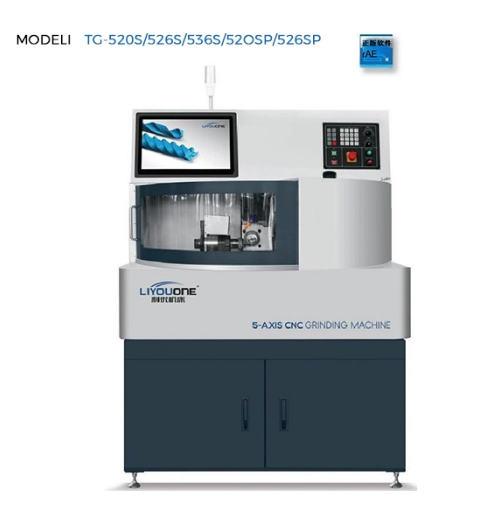
EDM (Electrical Discharge Machining) excels at machining hard-to-reach areas, making it ideal for creating intricate tool features that are difficult to access with traditional grinding. EDM uses electrical discharges to erode material, allowing for the production of detailed shapes, internal cavities, and undercuts without direct tool contact. This is particularly useful for tools with complex geometries, such as small slots or deep holes, where CNC tool grinding might not be practical.
EDM is particularly suited for machining tough materials like tungsten carbide, titanium, and heat-treated steels. These materials, which are commonly used in industries like aerospace and automotive, are challenging to grind with conventional methods due to their hardness. EDM's non-contact, spark-based process can efficiently handle these materials without generating the heat that could affect the tool's integrity, making it the ideal method for high-precision tools made from tough alloys.
When to Choose CNC Tool Grinding vs EDM for High-Precision Tool Manufacturing
EDM offers superior precision in producing fine details and tight tolerances. It can achieve intricate shapes such as sharp corners and micro-sized features that would be difficult or impossible to replicate with CNC grinding. This makes EDM highly effective for applications requiring exceptional accuracy, such as mold making, precision stamping, and creating specialized cutting tools, ensuring the desired performance and geometry are met.
CNC tool grinding is ideal for simpler, high-precision tools like drills and end mills, where the geometry is less complex. For intricate shapes, mold cavities, or internal features, EDM is the better choice, as it can handle complex geometries and hard-to-reach areas that CNC grinding cannot easily achieve.
CNC tool grinding is more cost-effective for high-volume production, especially for simple tools. However, EDM offers superior precision and can handle more intricate details, making it worth the extra cost for highly complex shapes or tough materials.
CNC grinding works well with common materials like high-speed steel and carbide. For tougher materials like titanium, tungsten carbide, or heat-treated steels, EDM is preferable due to its ability to handle hard, delicate materials without damaging them.
CNC tool grinding is best for simpler tools and higher-volume production, where cost efficiency is important. EDM is preferred for intricate geometries, complex mold cavities, or when working with tough, hard-to-machine materials.
While CNC grinding provides excellent precision, EDM excels in achieving extremely fine details, tight tolerances, and complex shapes that are difficult for grinding methds to replicate, especially with hard or intricate materials.
CNC tool grinding is ideal for materials like high-speed steel, carbide, and other tough alloys. It's particularly effective for tools like drills, end mills, and reamers, where precision is critical but the material isn’t excessively tough or intricate.
Yes, EDM typically incurs higher costs due to the specialized equipment and slower processing times. However, for complex or tough materials, the precision and capability of EDM may justify the added expense over CNC tool grinding.
In high-precision tool manufacturing, both CNC tool grinding and EDM offer unique advantages depending on the application. CNC tool grinding is ideal for high-volume production of simple tools with excellent precision, making it cost-effective for bulk manufacturing. On the other hand, EDM shines when dealing with intricate geometries, hard materials, or complex shapes that are difficult to achieve with traditional grinding.
By understanding the key differences in precision, material compatibility, and production speed, manufacturers can choose the method best suited for their specific needs. Whether optimizing cost or seeking the highest level of detail, both technologies play a critical role in advancing the capabilities of modern toolmaking.


