
- All
- Product Name
- Product Keyword
- Product Model
- Product Summary
- Product Description
- Multi Field Search
English
Views: 0 Author: Site Editor Publish Time: 2025-08-27 Origin: Site


The advent of CNC grinding technology has revolutionized the manufacturing industry, providing unprecedented precision and efficiency in tool production. This article delves into the fundamentals of CNC grinding, focusing on the key aspects of CNC tool grinding machines, including the 5-Axis and 4-Axis variants. By understanding the intricacies of these machines, manufacturers can enhance their production capabilities and maintain a competitive edge in the market.
CNC grinding involves the use of computer numerical control (CNC) systems to manage the movement of grinding machines. This technology allows for the precise shaping and finishing of tools and components, ensuring high accuracy and repeatability. CNC grinding machines are equipped with multiple axes, enabling them to perform complex grinding operations with ease. The integration of advanced software further enhances their capabilities, allowing for the automation of intricate processes.
CNC tool grinding machines are essential in the production of high-precision tools used across various industries. These machines are designed to handle a wide range of materials, including metals, ceramics, and composites. The ability to grind complex geometries with tight tolerances makes them indispensable in sectors such as automotive, aerospace, and medical manufacturing. The precision offered by CNC tool grinding machines ensures that tools meet stringent quality standards, enhancing the overall efficiency of production processes.
The 5-Axis CNC tool grinding machine is a versatile piece of equipment that offers superior precision and flexibility. With five axes of movement, it can perform complex grinding tasks that would be challenging for traditional machines. This capability is particularly beneficial in the production of intricate tools and components, where precision is paramount. The 5-Axis CNC tool grinding machine is widely used in industries that demand high-quality tools, such as aerospace and medical device manufacturing.
While slightly less complex than their 5-Axis counterparts, 4-Axis CNC tool grinding machines still offer significant advantages in terms of precision and efficiency. These machines are ideal for producing tools with less intricate geometries, making them suitable for a variety of applications. The 4-Axis CNC tool grinding machine is often used in the automotive industry, where the production of high-quality engine components is critical. Despite having fewer axes, these machines maintain a high level of accuracy, ensuring that tools meet the required specifications.
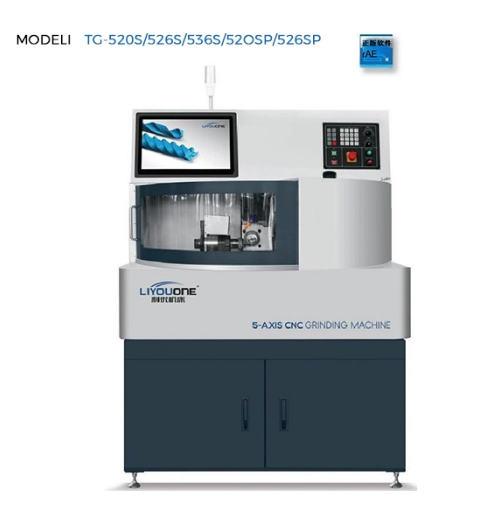
CNC grinding machines are utilized in a wide range of industries, each with its unique requirements and challenges. In the automotive industry, these machines are used to produce precision parts, engine components, and transmission systems. The high precision and efficiency of CNC grinding machines make them ideal for meeting the stringent quality and safety standards of the automotive sector.
In the medical industry, CNC grinding machines play a crucial role in the production of surgical instruments, implants, and other medical devices. The precision offered by these machines ensures that medical tools meet the exacting standards required for patient safety and effective treatment outcomes.
The aerospace industry also benefits from the precision of CNC grinding machines. These machines are used to manufacture complex components that must withstand extreme environmental conditions. The ability to produce parts with high precision and durability is essential for the development of reliable aerospace technologies.
CNC grinding machines, including the 5-Axis and 4-Axis variants, are indispensable tools in modern manufacturing. Their ability to produce high-precision tools and components makes them essential in industries such as automotive, aerospace, and medical manufacturing. By understanding the capabilities and applications of these machines, manufacturers can optimize their production processes and maintain a competitive edge in the market. For those interested in exploring the specifics of these machines, the 5-Axis CNC Tool Grinding Machine and 4-Axis CNC Tool Grinding Machine offer valuable insights.
1. What is a CNC tool grinding machine?
A CNC tool grinding machine is a type of equipment used to shape and finish tools and components with high precision, using computer numerical control (CNC) technology.
2. How does a 5-Axis CNC tool grinding machine differ from a 4-Axis machine?
A 5-Axis CNC tool grinding machine offers greater flexibility and precision due to its additional axis of movement, allowing for more complex grinding operations compared to a 4-Axis machine.
3. What industries benefit from CNC grinding machines?
Industries such as automotive, aerospace, and medical manufacturing benefit significantly from the precision and efficiency of CNC grinding machines.
4. Why is precision important in CNC grinding?
Precision is crucial in CNC grinding to ensure that tools and components meet stringent quality standards, enhancing the efficiency and reliability of manufacturing processes.
5. Can CNC grinding machines handle different materials?
Yes, CNC grinding machines are capable of handling a variety of materials, including metals, ceramics, and composites, making them versatile tools in manufacturing.
6. What are the advantages of using CNC grinding machines in the medical industry?
In the medical industry, CNC grinding machines ensure that surgical instruments and implants meet precise specifications, contributing to patient safety and effective treatment outcomes.
7. How do CNC grinding machines contribute to the aerospace industry?
CNC grinding machines contribute to the aerospace industry by producing high-precision components that can withstand extreme environmental conditions, ensuring the reliability of aerospace technologies.


