
- All
- Product Name
- Product Keyword
- Product Model
- Product Summary
- Product Description
- Multi Field Search
English
Views: 0 Author: Site Editor Publish Time: 2026-03-09 Origin: Site


When it comes to mold tool manufacturing, precision is the key to delivering high-quality products. CNC grinders for mold tools play a crucial role in enhancing accuracy, ensuring tight tolerances, and improving surface finishes. In this article, we will explore what CNC grinders are, their core benefits, typical applications in mold tool production, and why they are a game-changer for industries demanding high-precision machining. With the growing need for advanced technology in mold production, it is essential to understand the significant advantages these machines bring to the manufacturing process.
CNC grinders for mold tools are highly specialized machines designed to grind and shape tools used in mold-making processes. These machines leverage CNC (Computer Numerical Control) technology to automate the grinding process, providing unmatched precision and efficiency compared to manual methods.
Core Components of a CNC Grinder:
A typical CNC grinder for mold tools consists of several key components:
CNC Controller: This is the brain of the machine, which executes the programmed instructions for precise tool movements. The CNC controller allows operators to input specific designs and instructions for the machine to follow.
Grinding Wheel: The rotating abrasive tool that performs the grinding action. The choice of grinding wheel affects the surface finish and cutting efficiency.
Spindle: This holds the grinding wheel and rotates it at high speeds. The spindle is integral to the grinding process and must maintain high precision during operation.
Axes: These allow for multiple degrees of movement, ensuring that the grinding tool can follow intricate patterns and contours with ease. The axes movement is critical for grinding tools to have precision in complex geometries.
The primary difference between manual grinding and CNC grinding lies in the automation and precision CNC machines offer. While manual grinding relies heavily on the operator's skill and consistency, CNC grinders automate the grinding process, reducing human error and improving repeatability. This ensures that the resulting mold tools are identical to the specifications set in the design.
Moreover, CNC grinders come in various configurations, most notably 4-axis and 5-axis models. A 4-axis CNC grinder can move along the X, Y, and Z axes, with an additional rotational axis, while a 5-axis CNC grinder adds an extra rotational axis for more complex and precise movements. This capability makes 5-axis grinders ideal for intricate molds and parts with complex geometries. For example, 5-axis grinders can easily create precision angles or contours that would be impossible to achieve using traditional manual methods.
Precision grinding is essential in mold tool production because even the slightest deviation from the required dimensions can lead to defects in the final product. Mold tools, such as core pins, cavities, and inserts, must be crafted to micron-level precision to ensure they fit together seamlessly in the final mold. Even the smallest variation can cause part misalignment, affecting the quality of the molded product.
The importance of tight tolerances cannot be overstated. For example, in the production of injection molds, the slightest misalignment can lead to significant defects in the molded parts. CNC grinders for mold tools ensure that mold components are ground to extremely fine tolerances, ensuring that parts fit together with minimal gaps, improving the overall quality and performance of the finished mold. This level of precision is critical for industries such as automotive, aerospace, and electronics, where even the smallest imperfection in the mold can result in defective or non-functional parts.
Additionally, the surface finish of the mold tool is critical. A rough surface finish can cause friction, leading to premature wear and tear of the mold, as well as poor-quality molded products. CNC grinding produces smooth, consistent surfaces that enhance the mold’s durability and the quality of the molded parts. This also helps reduce the wear and tear on the mold itself, resulting in fewer mold replacements and a longer tool life.
CNC grinders for mold tools directly impact mold life. By ensuring a smoother surface finish and tighter tolerances, the mold is less prone to wear and tear. This leads to longer-lasting molds that require fewer repairs or replacements, reducing overall operational costs. Furthermore, reduced wear ensures that the molds perform consistently over time, producing high-quality parts without the need for constant retooling. In industries where mold maintenance costs can be a significant expense, this can provide a substantial return on investment over time.
The improved mold life also leads to more efficient production runs. When molds last longer, manufacturers can focus more on production and less on maintaining or replacing tools. This has a direct impact on throughput and reduces downtime in the manufacturing process.
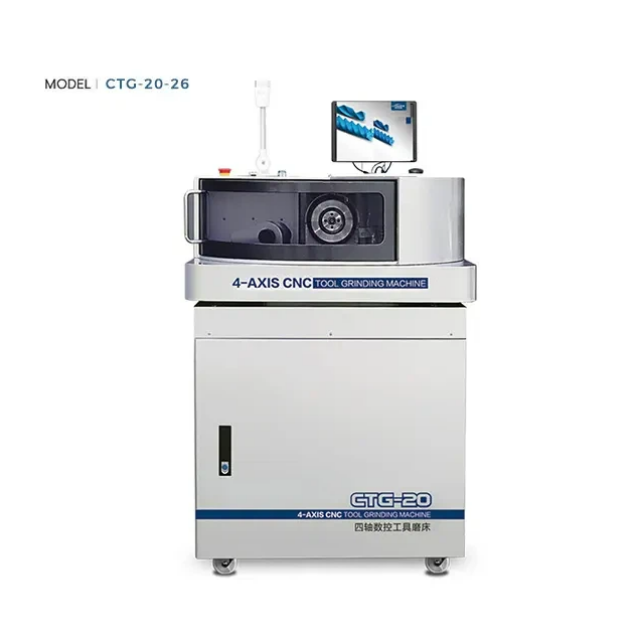
There are numerous advantages to using CNC grinders for mold tools, particularly when compared to manual grinding methods. Below, we’ll examine some of the key benefits:
Key Advantages Comparison — Manual Grinding vs CNC Grinding
Feature | Manual Grinding | CNC Grinders for Mold Tools |
Precision Control | Moderate | High (micron-level) |
Repeatability | Low | Excellent |
Operator Dependency | High | Low |
Process Speed | Slow | Fast |
Complex Geometry | Hard | Easy |
Automation | None | Full |
One of the main advantages of CNC grinding is the consistency it offers. CNC machines can repeat the exact same grinding process across multiple batches, ensuring that every part meets the required specifications without variation. This consistency is particularly important in industries where high volumes of parts need to be produced with the same quality and precision, such as in automotive or aerospace manufacturing. For example, when producing hundreds or thousands of parts, CNC grinders ensure that every piece is identical, eliminating the need for manual inspection or adjustments.
Manual grinding, while effective, is more prone to errors, especially with complex geometries or when the operator’s attention drifts. CNC grinders for mold tools eliminate most of these errors by following a precise program that automates the grinding process. This significantly reduces scrap rates, as the machine is capable of producing parts that adhere to specifications consistently. Furthermore, CNC grinding allows for adjustments in real-time, correcting any minor discrepancies during the process. This not only reduces scrap but also improves the overall yield of the production process.
CNC grinders for mold tools are used extensively in mold-making industries to manufacture a variety of mold components. These include:
Core Pins: Precision grinding ensures that core pins fit perfectly in molds, allowing for accurate injection molding. CNC grinders allow for very fine adjustments, ensuring that the core pins fit securely without gaps.
Cavities and Inserts: CNC grinders can create intricate cavity shapes and inserts with exceptional precision, reducing the need for further machining. This is especially useful in applications where the mold has to be tightly sealed to avoid leakage.
Lifters and Slides: Components that help eject parts from the mold are ground to tight tolerances, ensuring smooth operation. CNC grinders ensure that these parts work without friction, extending the mold's life and improving the efficiency of the molding process.
Other Complex Components: From multi-angled surfaces to precise radii, CNC grinders can handle the complexity of modern mold tool design. The versatility of these grinders allows manufacturers to produce a wide range of components, making them an essential tool in the mold-making industry.
The ability of 5-axis grinders to move in multiple directions allows them to grind parts with intricate geometries and angles, which would be extremely difficult or impossible with manual grinding methods. This flexibility makes CNC grinders the preferred choice for high-precision mold tools.
To get the most out of your CNC grinders for mold tools, it's important to follow certain best practices:
Correct Wheel Choice and Calibration: The grinding wheel plays a crucial role in the quality of the surface finish. Choosing the right type of wheel and calibrating it properly ensures that the grinding process runs smoothly. Regularly calibrating the machine helps maintain the accuracy of the grind.
Routine Maintenance and Dressing of Grinding Wheels: Over time, grinding wheels can become clogged with material. Regular maintenance and dressing of the wheels keep them sharp and efficient, ensuring the longevity of the machine and the quality of the parts produced.
Proper Part Fixturing and Cooling Application: To achieve consistent results, parts must be securely fixtured during grinding. Proper cooling also helps prevent overheating, which can lead to part deformation or excessive tool wear. Maintaining a steady flow of coolant during grinding is essential to prolong the life of the mold and grinding tools.
CNC grinders for mold tools provide significant improvements in precision, surface finish, and overall production quality. These machines reduce errors, increase consistency, and allow manufacturers to produce high-quality mold components efficiently. By investing in CNC grinding technology, manufacturers can ensure that their mold tools meet the highest standards of quality and performance, leading to lower production costs, longer tool life, and higher customer satisfaction. The ability to produce complex molds with tight tolerances and superior surface finishes ensures that manufacturers can meet the most demanding production requirements.
For more information or to request a quote, feel free to contact us and discover how LIYOUONE’s CNC grinders can optimize your mold tool production process.
Q1: What types of mold tools can be ground using CNC grinders?
A1: CNC grinders can handle a variety of mold tools, including core pins, cavities, inserts, lifters, and slides, providing precise dimensions and surface finishes.
Q2: How does CNC grinding improve mold tool longevity?
A2: CNC grinding produces smoother surface finishes and tighter tolerances, reducing wear and tear on mold tools, which increases their lifespan and reduces the need for frequent maintenance.
Q3: What is the difference between a 4-axis and a 5-axis CNC grinder?
A3: A 5-axis CNC grinder provides more flexibility, allowing for more complex shapes and angles, while a 4-axis CNC grinder is suitable for simpler geometries and parts.
Q4: Why is precision so important in mold tool production?
A4: Precision ensures that mold components fit together accurately, improving product quality and reducing defects in the final molded parts. This results in higher efficiency and lower production costs.


